Lab 7 – Microsoft Sentinel: Analytics Rules, Detections & ASIM
SC-200: Microsoft Security Operations Analyst
Overview
Built Sentinel analytics rules from scheduled queries, configured entity behavior analytics, simulated three real-world attack patterns against a connected server, wrote KQL detection rules for each attack, and implemented ASIM (Advanced Security Information Model) normalization parsers. Supplemented with Microsoft Learn exercises for Sentinel analytics setup and threat detection.
Tasks Completed
- Created a scheduled query analytics rule from a Sentinel template
- Configured entity behavior analytics (UEBA) and enabled entity pages for users and hosts
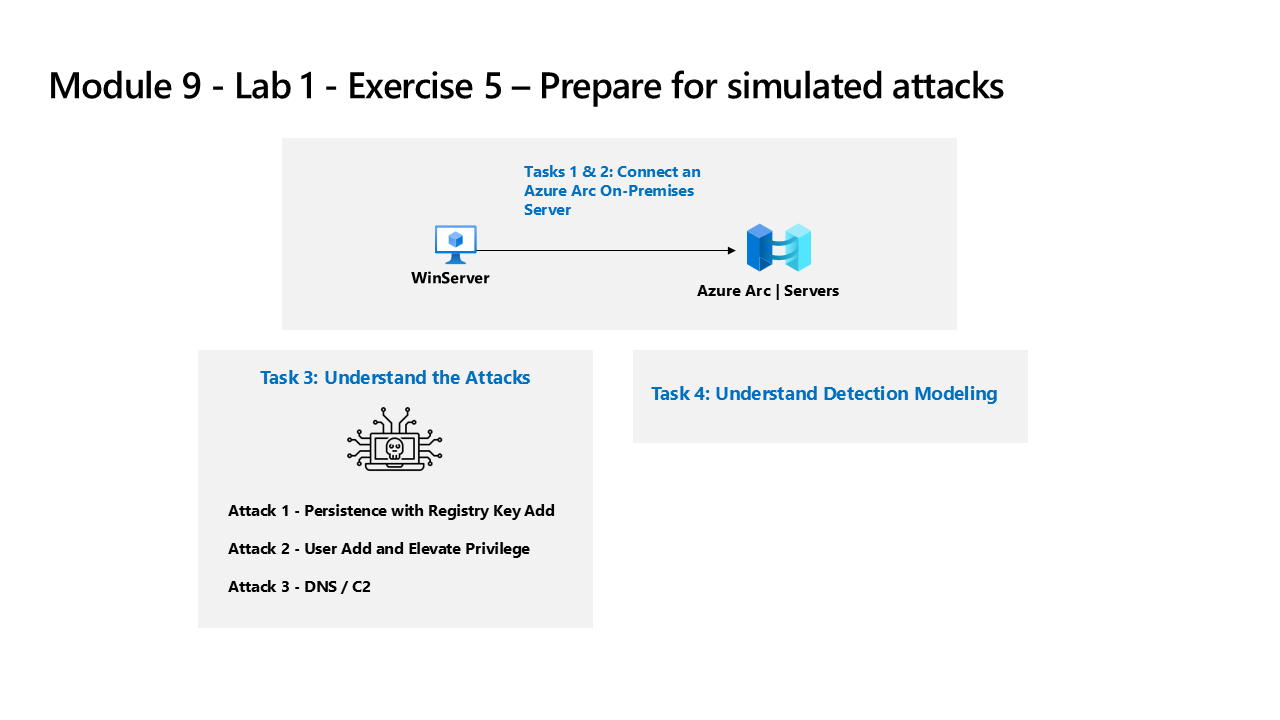
- Connected WinServer to Azure Arc as an on-premises server target for attack simulations
- Simulated Attack 1: Persistence via registry key add (startup.bat RegKey)
- Simulated Attack 2: User add and privilege elevation (SecurityEvent — Local Administrators)
- Simulated Attack 3: Command and Control DNS query (C2 DNS beaconing)
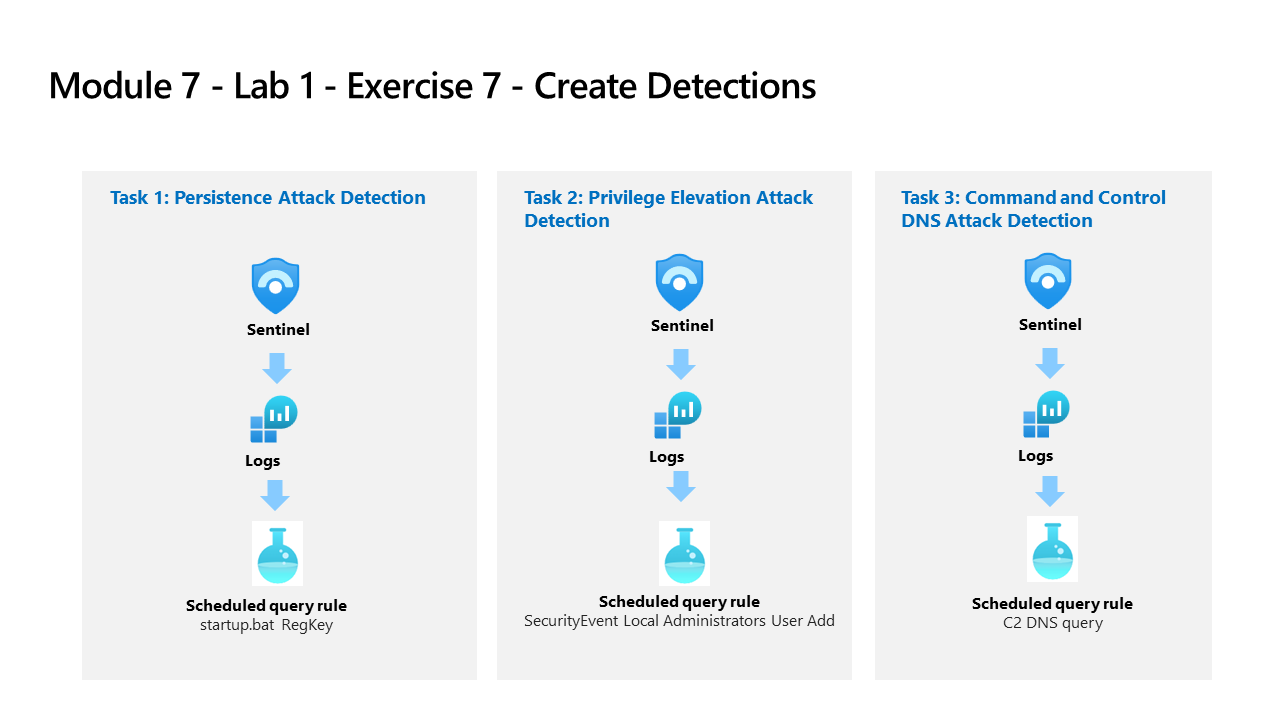
- Created a scheduled query detection rule for the persistence attack (startup.bat RegKey in SecurityEvent)
- Created a scheduled query detection rule for the privilege elevation attack (Local Administrators User Add)
- Created a scheduled query detection rule for the C2 DNS attack (C2 DNS query pattern)
- Implemented an ASIM (Advanced Security Information Model) network session parser to normalize connector data
- Configured Microsoft Sentinel analytics settings and detected threats via two Microsoft Learn exercises
Environment: Employer-provided Azure subscription (resources deleted after lab).
Source Material
Completed using Exercise 2: Scheduled Query, Exercise 3: Entity Behavior, Exercise 4: Understand Attacks, Exercise 5: Perform Attacks, Exercise 6: Create Detections, and Exercise 8: ASIM from the SC-200T00A MicrosoftLearning GitHub repository; and Microsoft Learn exercises Analyze Data Setup and Detect Threats with Sentinel Analytics. Completed in an employer-provided Azure subscription.